An Update
It has been a while since I last updated my progress in drone racing. My last post was a while ago, about my first drone. A LOT has happened since then. One may be able to get glimpses through my blog posts, but I thought I would put a proper update post so that one can be informed and I can post more things here, like analyzing my flying and lines not only in the simulator but in real life as well.
Referring my last post last post, I have switched a few components since. In about February of this year, I switched form using the EMAX ECO II motors to the VCI Spark Pro motors. This was mainly done as the EMAX motors are not really optimized for racing. They are very durable, but lack the proper weight savings and the proper kV for racing. The EMAX motors were 1700 kV, where as the VCIs are 2050 kV. That alone gives me a lot more power, but the better thing is I get a lot more throttle response on the VCIs, and they just feel INCREDIBLE.
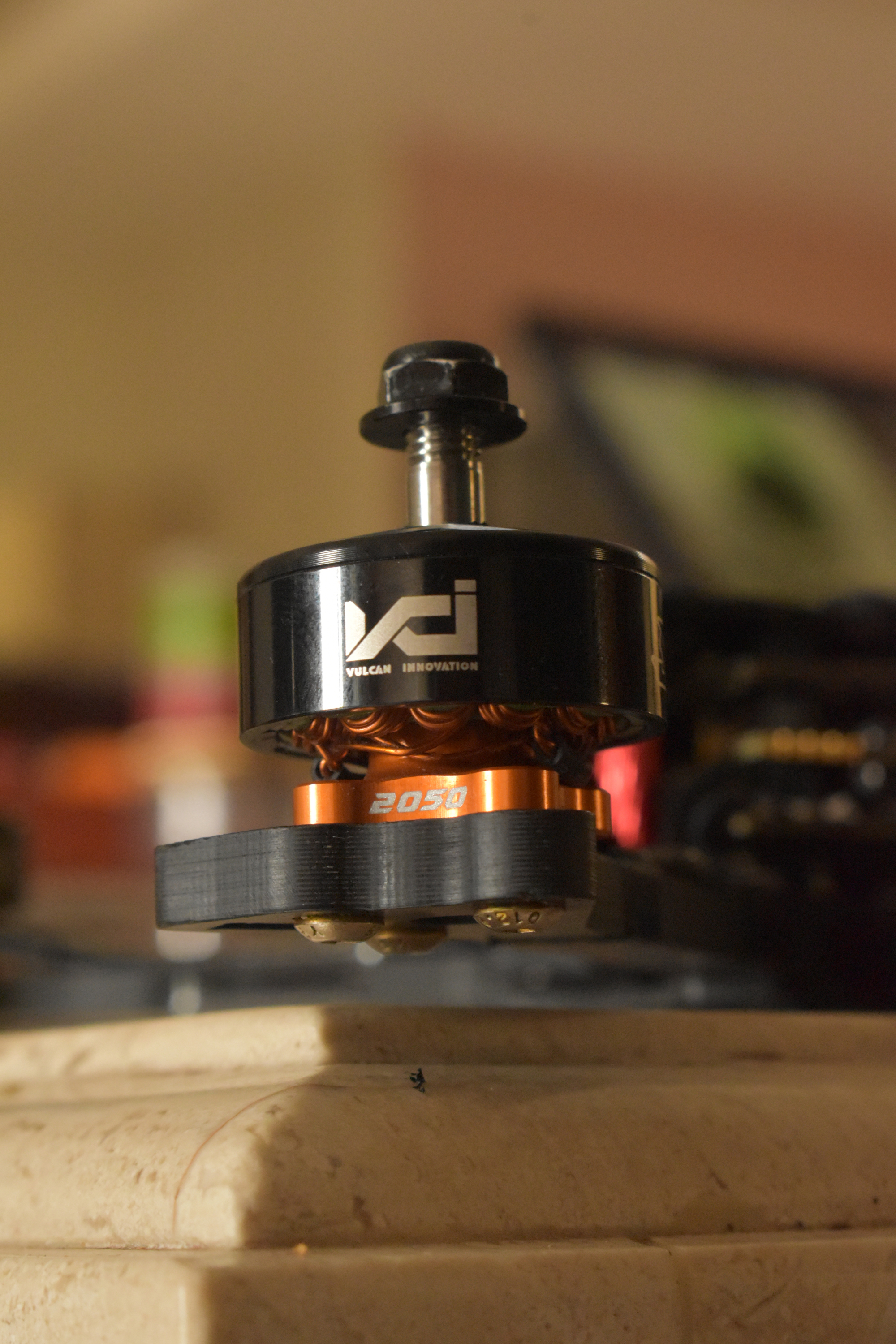
In the VNIT race, I had about 1 drone with VCIs and a spare drone without a video system as the camera was not available. Since then, I got another frame and more motors. As of now, I have 3 full drones. 2 with VCI motors and one with the EMAX motors. I still have the EMAX quad as a spare and I will still keep it around for spec racing.
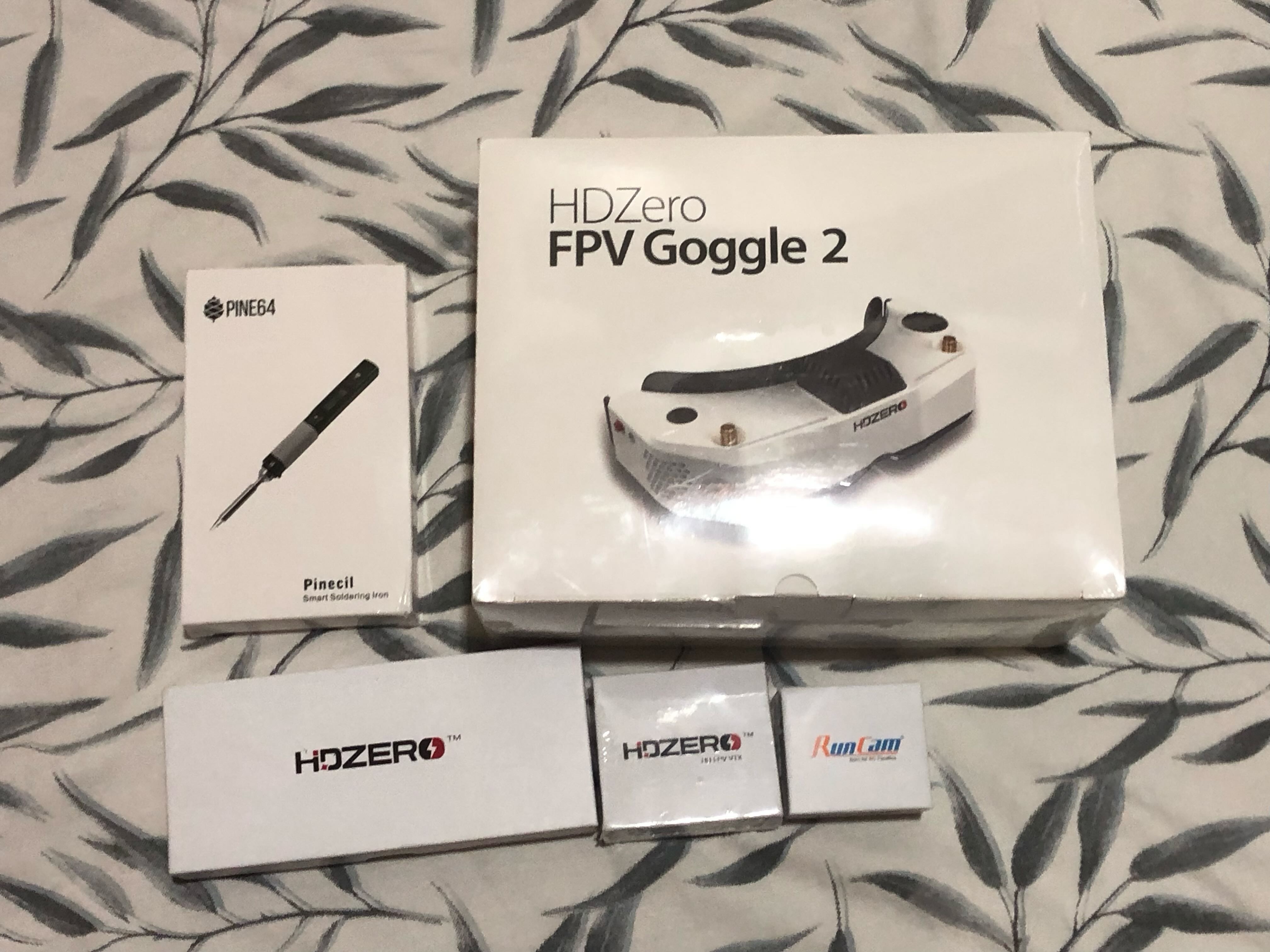
I also upgraded to HDZero, a digital video system optimized for racing and racing only. It has latency comparable to analog while having 540p and 90 fps. It may not seem like much, but 540p when combined with 90 fps and digital video quality makes looking at gates so much easier. I have the system mounted on one of my VCI quads. I could only get one set as the video transmitters (VTXs) were out of stock.
It was, however, a VERY expensive upgrade. But I still think it would be worth it, especially considering my night time incident at my last race at VNIT and the fact that my old goggles, the Skyzone 04O Pros had an average latency of about 40ms and more importantly had variable latency (check out this video (link) for more info). I think I'll not regret buying it. But I'm still a little salty about the fact that what would cost about $730 internationally cost me about 84,000 INR (that's about $880 right now). All because India has VERY strict drone laws and I have to get this via retailers who take their cut.
I have also gotten a lot better in the simulator. I've been told I focus way too much on lines and should use more throttle but I don't mind. I think even if one flies the best lines at an 80% throttle limit, one will be faster than flying wide and inefficient lines at a 100% throttle limit. Obviously, flying tight lines at higher throttle limits takes a LOT, and I mean a LOT of practice and skill, something I'm working towards. There is something meditating for me in finding what the best lines are and trying to hit them consistently using the somewhat primitive interface of a drone controller, but it challenges my mind to try and couple and decouple all the 4 inputs, throttle, roll, yaw and pitch, at the same time. I have to decouple because I input them separately and I have to couple them together to get the final pose and state of the drone to follow the most optimal race line. There's something just really fascinating and stimulating to it, and it is fairly relaxing.
I think the main thing I, and anyone else should focus on is minimizing the impulse provided and maximizing the amount of momentum conserved at all times. That's how I approach racing lines. I find where exactly I can conserve momentum and find the best way to utilize it when I cannot. If I were asked to make a model that finds the best racing line (I'm interested in making something like that, I don't know), I would have momentum conservation as the function to maximize. And not just momentum, but momentum towards a baseline.
Enough of a tangent, we'll save that for a later post. So here is my current setup:
Transmitter and Goggles:
TBS Mambo
BetaFPV ELRS Module
HDZero goggles V2
Drone 1:
VCI 2207 Spark Pro 2050 kV motors
Foxeer Reaper Slim ESC
TMotor Racer F7 Flight Controller
HDZero V3 VTX
HDZero Nano 90 Camera
Radiomaster RP1 Reciever
Five33 Switch Back Pro Frame
Drone 2:
VCI 2207 Spark Pro 2050 kV motors
Sequere Blueson A1 ESC
TMotor Racer F7 Flight Controller
Foxeer Predator 5 Nano Camera
TBS Unify 32 Nano VTX
Radiomaster RP1 Reciever
Five33 Switch Back Pro Frame
Drone 3:
EMAX Eco II 1700 kV motors
Foxeer Reaper Mini ESC
TMotor Racer F7 Flight Controller
Foxeer Predator 5 Nano Camera
HGLRC Zues VTX
Radiomaster RP1 Reciever
Five33 Switch Back Pro Frame
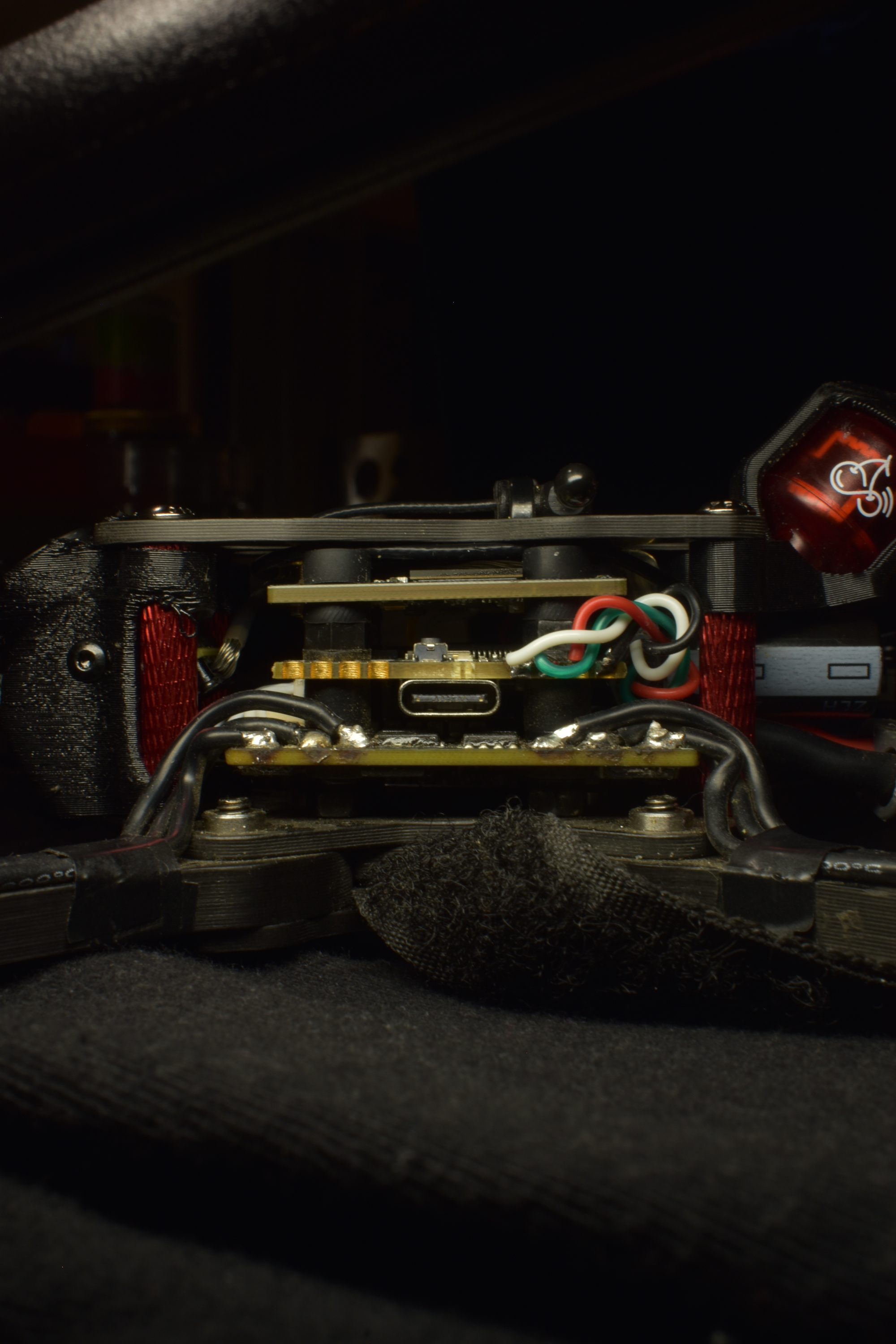
PS: The cover picture is a long exposure shot I took of the stack. I think it looks pretty clean.